
Garbh Sanskar During Pregnancy
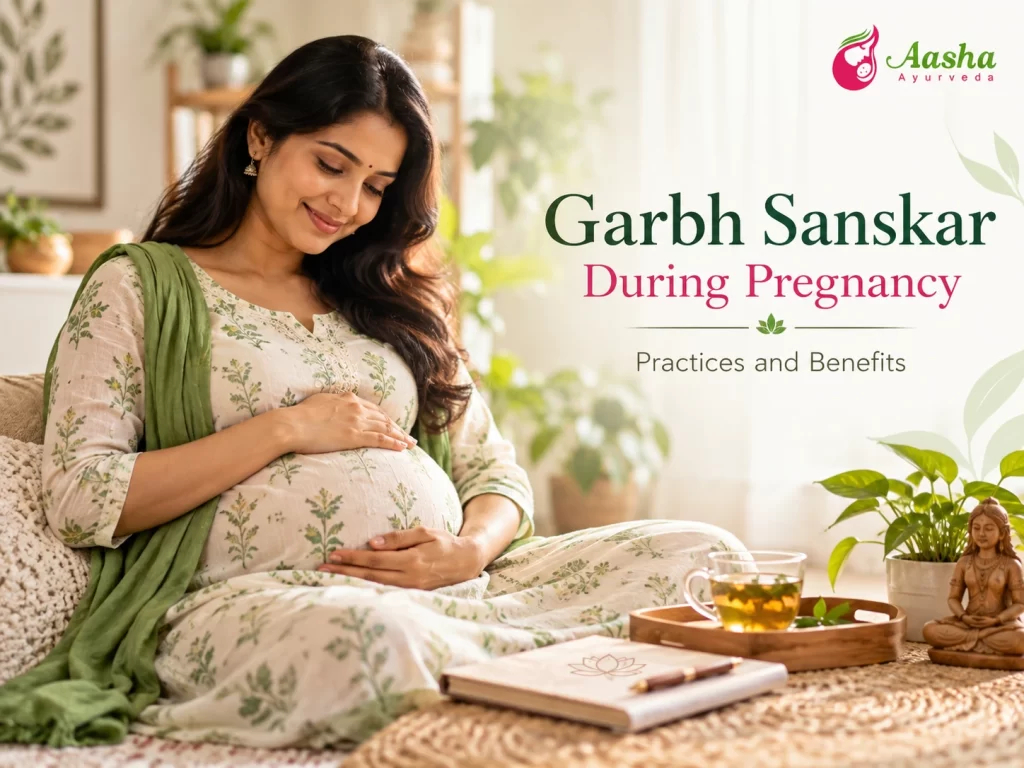
Garbh Sanskar During Pregnancy: Practices and Benefits
Garbh Sanskar during pregnancy is a traditional Indian prenatal wellness approach that focuses on the mother’s diet, emotional wellbeing, daily routine, positive environment, meditation, music, communication with the baby, and pregnancy-safe physical activity. The traditional idea is to create a nurturing environment for both mother and developing baby from the garbh, or womb, onward. Fortis Healthcare similarly describes Garbh Sanskar through practices such as healthy food, positive thinking, Garbh Sangeet, prenatal yoga, meditation, mindful reading, and Garbh Samvad.
However, Garbh Sanskar should not be presented as a medical treatment or as a way to guarantee a baby’s intelligence, personality, normal delivery, or freedom from pregnancy complications. Its most responsible modern use is as a prenatal wellness practice alongside regular antenatal medical care.
At Aasha Ayurveda, Garbh Sanskar can be approached through pregnancy-friendly diet, lifestyle guidance, emotional support, safe yoga and meditation, childbirth preparation, and family participation. You can explore the complete Garbh Sanskar guidance at Aasha Ayurveda.
What Is Garbh Sanskar?
Garbh Sanskar is a traditional prenatal wellness concept that encourages a healthy physical, emotional, and supportive environment during pregnancy.
The term is commonly understood as:
Garbh = womb or pregnancy
Sanskar = values, refinement, or positive conditioning
So, the Garbh Sanskar meaning is broadly connected with nurturing the mother and unborn baby through healthy habits, thoughts, food, relaxation, family support, and traditional practices.
Another spelling you may see is Garbha Samskara. Both terms are generally used for the same broad prenatal tradition.
Fortis describes it as a holistic pregnancy approach involving Ayurveda-inspired principles, maternal wellbeing, music, positive thinking, yoga, meditation, and communication with the unborn baby.
Traditional meaning vs modern interpretation
Traditionally, Garbh Sanskar includes ideas about imparting positive values to the child before birth.
A modern evidence-conscious interpretation is more practical:
support the mother’s nutrition + physical health + emotional wellbeing + safe activity + antenatal care + positive family environment.
That distinction is important because some traditional claims are cultural or philosophical rather than scientifically proven medical outcomes.
What Is Garbha Samskara?
Garbha Samskara is another transliteration of Garbh Sanskar.
The phrase is often used in Ayurvedic, Sanskrit-derived, and traditional Indian pregnancy literature to describe practices intended to create a positive maternal and prenatal environment.
The term should not be confused with a medical therapy.
It is better understood as a pregnancy wellness framework that may include:
healthy food, meditation, safe prenatal yoga, music, prayer, reading, emotional wellbeing, partner support, and regular pregnancy care.
What Are the Main Practices of Garbh Sanskar During Pregnancy?
A practical Garbh Sanskar routine does not need to be complicated.
| Practice | Practical purpose |
| Healthy pregnancy diet | Supports maternal nutrition and fetal development |
| Positive emotional environment | Supports maternal mental wellbeing |
| Meditation | May support relaxation and stress management |
| Prenatal yoga | Helps maintain safe physical activity when medically appropriate |
| Garbh Sangeet | Can provide relaxation and a calm routine |
| Garbh Samvad | Encourages parent-baby bonding |
| Positive reading | Creates a peaceful and meaningful daily routine |
| Rest and sleep | Supports maternal recovery and wellbeing |
| Partner involvement | Provides emotional and practical support |
| Antenatal care | Monitors maternal and fetal health |
Fortis includes many of these same core practices, particularly positive thinking, healthy food, music, reading, gentle yoga, meditation, and Garbh Samvad.
1. Healthy Diet in Garbh Sanskar
Diet is one of the most practical parts of Garbh Sanskar.
A pregnant woman does not need a highly restrictive or complicated “special Garbh Sanskar diet.” NHS guidance recommends eating a variety of foods during pregnancy so that mother and baby receive a balanced range of nutrients.
A practical Indian pregnancy diet can include dal and pulses, seasonal vegetables, fruits, whole grains, curd or other suitable dairy foods, nuts, seeds, and adequate protein.
The important principle is:
balanced nutrition is more useful than relying on one “special” pregnancy food.
Food safety also matters. Pregnancy guidance recommends avoiding unsafe raw or undercooked foods and unpasteurised products and limiting caffeine to no more than 200 mg per day.
2. Positive Thinking and Emotional Wellbeing
Traditional Garbh Sanskar gives strong importance to a peaceful and positive environment.
A realistic goal is not to force a pregnant woman to “stay happy all the time.” Pregnancy can include worry, fatigue, mood changes, physical discomfort, and emotional ups and downs.
A healthier Garbh Sanskar approach is to encourage:
supportive family relationships, adequate rest, enjoyable hobbies, emotional communication, realistic expectations, and professional mental-health support when needed.
Positive thinking can be part of emotional wellness, but negative thoughts do not mean a mother has harmed her baby.
3. Garbh Sangeet: Music During Pregnancy
Listening to soft music, devotional music, instrumental tracks, mantras, or other calming sounds is commonly included in Garbh Sanskar.
Fortis describes Garbh Sangeet as one of the central practices and recommends creating a calm environment with soothing music.
The most responsible benefit to claim is maternal relaxation and enjoyment.
It is not scientifically established that listening to a particular mantra or song will guarantee higher intelligence, better memory, or a specific personality in the baby.
So Garbh Sangeet should be used as a pleasant wellness practice, not as a developmental guarantee.
4. Prenatal Yoga in Garbh Sanskar
Yoga can be a useful part of Garbh Sanskar when it is adapted for pregnancy and medically appropriate.
ACOG states that healthy women with uncomplicated pregnancies can generally continue or begin regular physical activity. It recommends at least 150 minutes of moderate-intensity aerobic activity per week for many healthy pregnant women. Modified prenatal yoga is also listed among suitable activities.
If 150 minutes are divided across 5 days:
150 ÷ 5 = 30 minutes per day
This does not mean every pregnant woman should automatically exercise for 30 minutes daily.
High-risk pregnancy, bleeding, placenta-related complications, cervical problems, preterm-labour concerns, or other medical conditions can change what is appropriate.
Always follow your obstetrician’s advice.
5. Meditation and Relaxation
Meditation is another common component of Garbh Sanskar and can be incorporated as a simple relaxation practice.
A pregnant woman may spend a few minutes focusing on comfortable breathing, quiet reflection, prayer, or mindfulness.
The aim should be:
relaxation, emotional balance, and a calmer daily routine.
Avoid extreme breathing exercises, prolonged breath-holding, or techniques that cause dizziness or discomfort.
6. Garbh Samvad: Talking to Your Baby
Garbh Samvad refers to talking or communicating with the unborn baby.
A mother may:
talk gently to the baby, sing, read aloud, or simply spend a few quiet minutes connecting with the pregnancy.
The father or partner can participate too.
Fortis specifically includes talking and singing to the baby as a Garbh Sanskar practice and encourages the father’s participation as part of family bonding.
Garbh Samvad is best understood as a bonding activity, not a scientifically proven method of teaching academic skills or programming the baby’s personality before birth.
7. Positive Reading During Pregnancy
Traditional Garbh Sanskar often recommends reading spiritual, motivational, or uplifting books.
The content does not have to be religious.
A woman can choose material that makes her feel calm and positive, such as inspirational books, stories, poetry, spiritual texts, or light reading she genuinely enjoys.
Fortis also includes mindful and uplifting reading among its Garbh Sanskar activities.
The practical goal is a peaceful routine—not transferring specific knowledge directly to the unborn baby.
8. Father’s Role in Garbh Sanskar
Garbh Sanskar should not become a responsibility placed only on the mother.
The father or partner can participate by supporting antenatal appointments, helping with meals and household work, listening to the mother’s concerns, joining relaxation or music time, and talking to the baby.
Aasha Ayurveda’s existing Garbh Sanskar program also describes participation by both mother and father and includes guidance for fathers during pregnancy.
This makes Garbh Sanskar a family-supported pregnancy wellness practice, rather than another list of duties for the mother.
How to Do Garbh Sanskar at Home
You do not need an elaborate ritual every day.
A simple home routine may look like this:
Morning: gentle breathing or meditation + nutritious breakfast
Daytime: normal pregnancy-safe activity + adequate fluids + balanced meals
Evening: short walk or doctor-approved prenatal activity
Relaxation: soothing music, reading, prayer, or Garbh Samvad
Night: regular sleep routine and reduced unnecessary stress
Fortis similarly recommends a simple at-home routine involving morning positivity, about 15–20 minutes of calming music, uplifting reading, doctor-approved prenatal yoga, and communication with the baby.
The exact schedule does not matter as much as consistency, comfort, and safety.
When Should Garbh Sanskar Start?
There is no scientifically established exact week or month when Garbh Sanskar must begin.
Healthy pregnancy habits can ideally begin before conception, while pregnancy-specific wellness practices can start after pregnancy is confirmed and adjusted throughout each trimester.
Fortis notes that Garbh Sanskar may be started after pregnancy is known and describes the third month as a commonly considered time for a more structured routine. This is traditional/program-based guidance rather than a universal medical rule.
Aasha Ayurveda’s existing program covers three broad periods: preconception, pregnancy, and post-delivery/baby care.
Trimester-Wise Garbh Sanskar Approach
| Stage | Main Focus |
| Before pregnancy | Nutrition, health review, healthy lifestyle, pregnancy planning |
| First trimester | Rest, nausea management, nutrition, antenatal appointments |
| Second trimester | Balanced diet, safe activity, meditation, music, bonding |
| Third trimester | Comfortable activity, rest, birth preparation, emotional support |
| After birth | Maternal recovery, breastfeeding support, newborn care |
A trimester-based approach is safer than recommending the same herbs, yoga poses, or diet to everyone throughout pregnancy.
What Are the Benefits of Garbh Sanskar?
The most reasonable Garbh Sanskar benefits relate to the mother’s routine and pregnancy experience.
It may help create a structured focus on nutrition, adequate rest, relaxation, family involvement, safe physical activity, and emotional bonding.
Fortis describes potential benefits for the mother as reduced stress, a more positive outlook, emotional preparation for motherhood, and bonding with the unborn child. It also describes traditional beliefs about benefits for the baby, but these should not be interpreted as guaranteed clinical outcomes.
What science supports more clearly
Modern pregnancy guidance strongly supports:
healthy nutrition, antenatal care, appropriate physical activity, food safety, and management of maternal medical conditions.
For uncomplicated pregnancy, ACOG reports that regular exercise can reduce back pain, support healthy weight gain, improve fitness, and may lower the risk of gestational diabetes and preeclampsia.
These benefits come from established pregnancy-care practices—not from the label “Garbh Sanskar” itself.
Is Garbh Sanskar Scientifically Proven?
This question needs a careful answer.
Garbh Sanskar as one complete traditional system has not been scientifically proven to guarantee specific outcomes such as a more intelligent child, a particular personality, or normal delivery.
However, several individual practices commonly included within Garbh Sanskar—balanced nutrition, pregnancy-safe physical activity, stress management, antenatal monitoring, and family support—are consistent with established prenatal-care principles.
Therefore, it is useful to separate:
Evidence-supported pregnancy practices
from
Traditional Garbh Sanskar beliefs
Both can be discussed respectfully without presenting traditional beliefs as confirmed medical facts.
Does Garbh Sanskar Make the Baby Intelligent?
There is not enough high-quality evidence to state that Garbh Sanskar, music, mantra, positive reading, or Garbh Samvad increases a baby’s IQ.
Child development is influenced by many factors, including genetics, maternal health, nutrition, pregnancy complications, birth circumstances, early childhood nutrition, learning, relationships, and environment.
So claims such as:
“Garbh Sanskar guarantees an intelligent baby”
should be avoided.
A better interpretation is:
Garbh Sanskar may help parents create a calmer, healthier, and more engaged pregnancy experience.
Can Garbh Sanskar Help With Normal Delivery?
Garbh Sanskar does not guarantee vaginal or normal delivery.
Delivery depends on many factors, including fetal position, placenta, maternal health, previous births, labour progression, fetal wellbeing, and pregnancy complications.
Safe pregnancy exercise can improve overall fitness and may offer several pregnancy benefits, but even regular activity cannot guarantee a particular mode of delivery.
Is Garbh Sanskar a Treatment?
No. Garbh Sanskar is not a medical treatment.
It is better described as a traditional prenatal wellness approach.
It should not be used to treat:
gestational diabetes, hypertension, placenta problems, fetal growth restriction, bleeding, preterm labour, infection, or other pregnancy complications.
These situations require appropriate obstetric care.
Is Garbh Sanskar Safe During Pregnancy?
Most lifestyle-based elements such as healthy food, relaxation, music, reading, and emotional support are generally low-risk.
But pregnancy requires extra caution with:
unverified herbs, Ayurvedic medicines, detox therapies, fasting, extreme yoga, abdominal pressure, strong breathing techniques, and supplements.
Pregnancy does not make every “natural” product automatically safe.
Similarly, some foods and drinks require specific safety precautions during pregnancy, including unpasteurised products, raw foods, certain fish, alcohol, and excess caffeine.
If you have a high-risk pregnancy or are taking medication, discuss any herbal product or exercise plan with your maternity care team.
Garbh Sanskar at Aasha Ayurveda
At Aasha Ayurveda, Garbh Sanskar can be approached as a structured prenatal wellness program rather than a medical treatment.
The focus can include pregnancy-friendly diet and lifestyle, emotional wellbeing, safe yoga and meditation, parent-baby bonding, Garbh Samvad, childbirth preparation, post-delivery mother care, and baby-care education.
For detailed information, visit the Aasha Ayurveda Garbh Sanskar program.
Aasha Ayurveda’s previously published Garbh Sanskar material also describes guidance across preconception, pregnancy, childbirth preparation, mother care, baby care, and father’s participation.
Garbh Sanskar should complement—not replace—routine antenatal visits, scans, investigations, prescribed supplements, vaccinations, or specialist obstetric care.
FAQs
Q1. What is Garbh Sanskar?
Garbh Sanskar is a traditional Indian prenatal wellness concept centred on healthy diet, lifestyle, emotional wellbeing, meditation, music, bonding activities, and a positive pregnancy environment.
Q2. What is the Garbh Sanskar meaning?
The word Garbh refers to the womb or pregnancy, while Sanskar broadly refers to values, refinement, or positive conditioning. In modern use, Garbh Sanskar generally describes a holistic pregnancy-wellness approach.
Q3. What is Garbha Samskara?
Garbha Samskara is another spelling or transliteration of Garbh Sanskar. It refers to the same broad traditional concept of prenatal wellbeing and positive practices during pregnancy.
Q4. When should Garbh Sanskar start?
There is no scientifically established fixed starting date. Healthy habits can begin before conception, while pregnancy-specific Garbh Sanskar activities can start after pregnancy is confirmed.
Q5. What activities are included in Garbh Sanskar?
Common practices include balanced nutrition, meditation, doctor-approved prenatal yoga, Garbh Sangeet, positive reading, Garbh Samvad, adequate rest, emotional support, and regular antenatal care.
Q6. Can I do Garbh Sanskar at home?
Yes. Many wellness activities can be incorporated at home, such as meditation, soothing music, reading, talking to the baby, healthy meals, and doctor-approved physical activity.
Q7. Is Garbh Sanskar scientifically proven?
Garbh Sanskar as an entire traditional system has not been proven to guarantee specific fetal or childhood outcomes. However, several components—healthy nutrition, safe exercise, antenatal care, and stress-management practices—are consistent with evidence-based pregnancy care.
Q8. Does Garbh Sanskar make the baby intelligent?
There is no reliable evidence that Garbh Sanskar can guarantee higher intelligence or IQ. Music, meditation, and bonding may support a positive pregnancy experience but should not be presented as intelligence-enhancing treatments.
Q9. Can fathers participate in Garbh Sanskar?
Yes. Partners can support appointments, nutrition, emotional wellbeing, relaxation activities, music, and communication with the baby. Fortis and Aasha Ayurveda both describe partner participation as part of the pregnancy experience.
Q10. Is Garbh Sanskar a medical treatment?
No. Garbh Sanskar is a prenatal wellness approach, not a medical treatment for pregnancy disease or complications.
Q11. Can Garbh Sanskar guarantee normal delivery?
No. The mode of delivery depends on multiple maternal, fetal, and obstetric factors.
Q12. Is prenatal yoga part of Garbh Sanskar?
Prenatal yoga is commonly incorporated. Healthy women with uncomplicated pregnancies can often perform modified pregnancy-safe yoga after discussing exercise with their obstetric care provider.
About the Author / Ayurvedic Reviewer
Content by: Aasha Ayurveda Edito rial Team
Reviewed for Ayurvedic Content By:
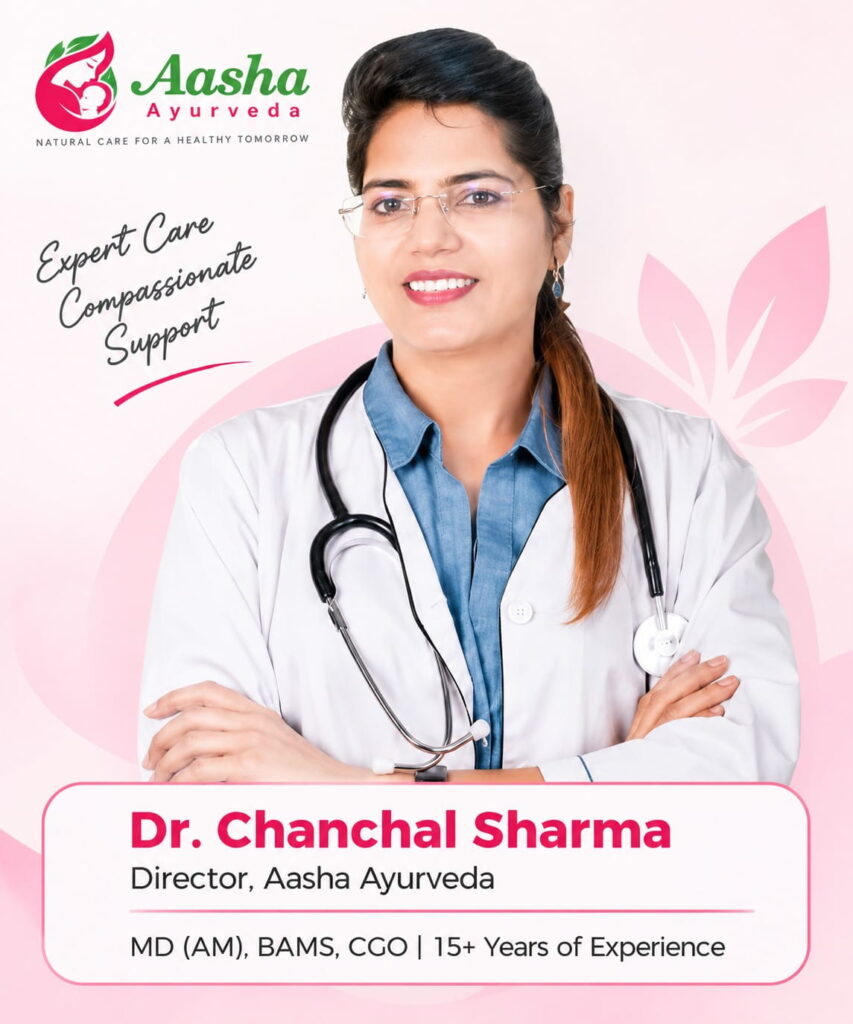
Medically Reviewed By: Dr. Chanchal Sharma
Qualifications: MD (AM), BAMS, CGO
Experience: 15+ Years
Last Reviewed: September 2026
Clinic: Aasha Ayurveda