
Right and Left Ovary Normal Size in CM
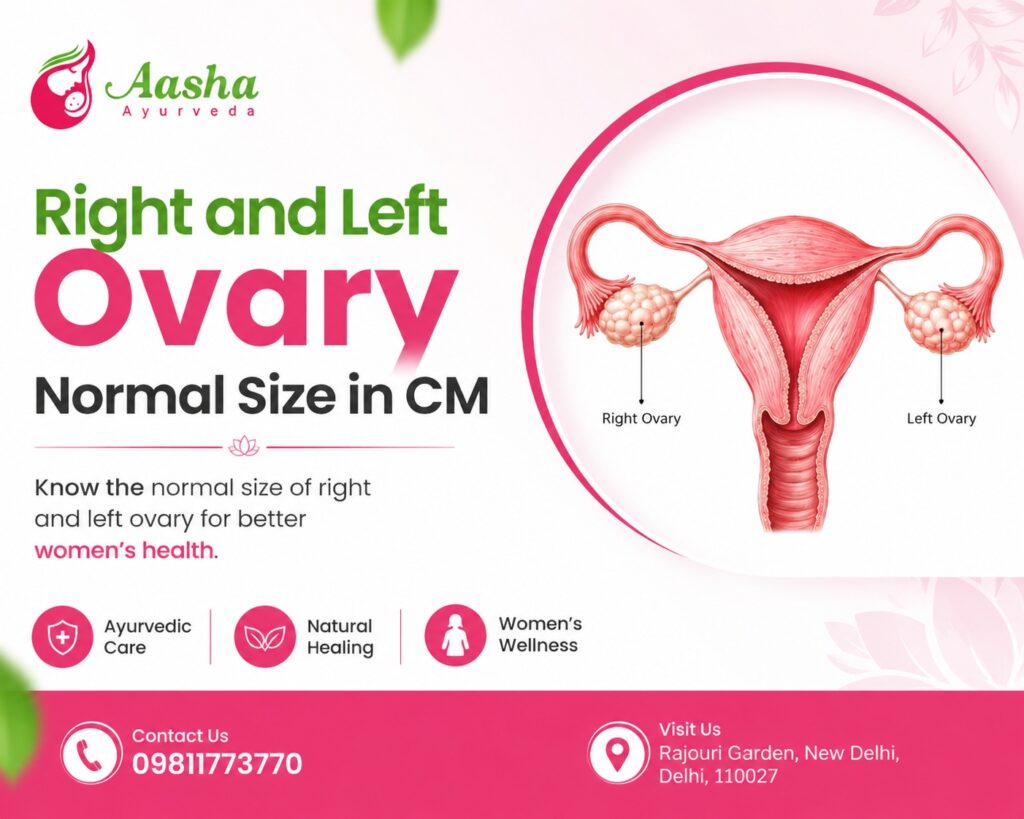
The right and left ovary normal size in cm in reproductive-age women is generally 2.5–5 cm in length, 1.5–3 cm in width, and 0.6–2.2 cm in thickness, with a normal ovarian volume of 5–15 cc. Mild differences between the two ovaries are common due to ovulation and normal hormonal changes.
When a woman undergoes a pelvic ultrasound or fertility assessment, one of the first things mentioned in the report is the right and left ovary normal size in cm. These measurements help doctors evaluate ovarian health, reproductive function, hormone production, and fertility potential. While slight differences between the two ovaries are common, understanding the normal ovary size can help you interpret your ultrasound report more confidently.
The ovaries are two small, almond-shaped reproductive organs located on either side of the uterus. They produce eggs (ova) and release essential hormones such as estrogen and progesterone. During an ultrasound, doctors measure each ovary’s length, width, thickness, and volume to identify whether the ovaries fall within the normal range or show signs of conditions like PCOS, ovarian cysts, diminished ovarian reserve, endometriosis, or menopause-related changes.
Generally, the right ovary normal size in cm and left ovary normal size in cm are quite similar, although one ovary may naturally be slightly larger than the other. Measurements may also vary depending on age, menstrual cycle, pregnancy, hormonal status, and overall reproductive health.
In this comprehensive guide by Aasha Ayurveda, you’ll learn:
- What is the normal ovary size?
- Right and left ovary normal size in cm
- Right ovary normal size in mm
- Left ovary normal size in mm
- Right ovary normal size in cc (volume)
- Normal ovary size chart
- How ovary size affects fertility
- How to understand an ultrasound report
Whether you’re planning pregnancy, undergoing fertility treatment, or simply reviewing an ultrasound report, this article will help you understand what your ovarian measurements mean.
What is the Normal Ovary Size?
The normal ovary size refers to the healthy dimensions and volume of an ovary as measured during an ultrasound examination. These measurements help doctors determine whether the ovaries are functioning normally and producing healthy follicles.
A healthy ovary is typically measured using three dimensions:
- Length
- Width
- Thickness
Using these values, doctors calculate the ovarian volume (in cubic centimeters or cc).
Average Normal Ovary Size
| Measurement | Normal Range |
| Length | 2.5–5 cm |
| Width | 1.5–3 cm |
| Thickness | 0.6–2.2 cm |
| Volume | 5–15 cc |
These values may vary depending on:
- Age
- Menstrual cycle
- Pregnancy
- Hormonal status
- Menopause
A slight variation between the left and right ovary is completely normal.
Why Does Ovary Size Matter?
Doctors assess ovarian size because it provides valuable information about reproductive health.
A normal-sized ovary usually indicates:
- Healthy ovarian reserve
- Normal hormone production
- Regular ovulation
- Healthy follicle development
Changes in ovarian size may indicate conditions such as:
- Polycystic Ovary Syndrome (PCOS)
- Ovarian cysts
- Endometriosis
- Premature ovarian insufficiency
- Menopause
- Ovarian tumors (less commonly)
Ovary size is only one aspect of assessment. Doctors also consider hormone levels, follicle count, symptoms, menstrual history, and imaging findings before making a diagnosis.
Right and Left Ovary Normal Size in CM
The right and left ovary normal size in cm generally falls within similar ranges. During a pelvic ultrasound, the radiologist records the dimensions of both ovaries to evaluate their structure and function.
Normal Right and Left Ovary Measurements
| Measurement | Normal Size |
| Length | 2.5–5 cm |
| Width | 1.5–3 cm |
| Thickness | 0.6–2.2 cm |
| Volume | 5–15 cc |
Healthy ovaries are usually symmetrical, although it’s common for one ovary to be slightly larger than the other due to the menstrual cycle or the presence of a dominant follicle.
Why Can One Ovary Be Slightly Larger?
Several normal physiological factors can cause one ovary to appear larger:
- Dominant follicle before ovulation
- Corpus luteum after ovulation
- Natural anatomical variation
- Temporary hormonal changes
This mild asymmetry is generally not a cause for concern if the ovarian structure appears normal.
Right Ovary Normal Size in CM
The right ovary normal size in cm in women of reproductive age is commonly reported as:
| Dimension | Normal Range |
| Length | 2.5–5 cm |
| Width | 1.5–3 cm |
| Thickness | 0.6–2.2 cm |
Example Ultrasound Report
Right Ovary:
- Length: 3.4 cm
- Width: 2.2 cm
- Thickness: 1.8 cm
- Volume: 7.8 cc
This represents a normal right ovary in most reproductive-age women.
What Can Increase the Right Ovary Size?
Temporary enlargement may occur because of:
- Ovulation
- Functional cysts
- Corpus luteum
- Pregnancy
- Hormonal stimulation
Persistent enlargement should be evaluated by a qualified gynecologist.
Left Ovary Normal Size in CM
The left ovary normal size in cm is generally the same as the right ovary.
Typical Measurements
| Dimension | Normal Range |
| Length | 2.5–5 cm |
| Width | 1.5–3 cm |
| Thickness | 0.6–2.2 cm |
Sample Normal Ultrasound
Left Ovary:
- Length: 3.2 cm
- Width: 2.0 cm
- Thickness: 1.7 cm
- Volume: 6.9 cc
These values indicate a healthy ovary.
A slightly smaller or larger left ovary is often considered normal unless accompanied by symptoms or abnormal ultrasound findings.
Right Ovary Normal Size in MM
Many ultrasound reports use millimeters (mm) instead of centimeters (cm). Knowing the conversion helps patients better understand their reports.
Centimeter to Millimeter Conversion
- 1 cm = 10 mm
Normal Right Ovary Size in MM
| Measurement | Normal Size |
| Length | 25–50 mm |
| Width | 15–30 mm |
| Thickness | 6–22 mm |
Example Report
Right Ovary:
- 36 × 24 × 18 mm
This falls within the normal range for many women of reproductive age.
Left Ovary Normal Size in MM
The left ovary normal size in mm is similar to the right ovary.
Standard Measurements
| Dimension | Normal Range |
| Length | 25–50 mm |
| Width | 15–30 mm |
| Thickness | 6–22 mm |
Example
Left Ovary:
- 34 × 22 × 17 mm
These measurements are generally considered normal when correlated with age, menstrual phase, and clinical findings.
Right Ovary Normal Size in CC
In addition to linear measurements, radiologists calculate the ovarian volume, which is expressed in cubic centimeters (cc). Ovarian volume provides additional insight into ovarian health and is especially useful when evaluating fertility, ovarian reserve, or conditions such as PCOS.
What Does CC Mean?
CC (cubic centimeters) represents the total volume of the ovary. It is calculated using the ovary’s length, width, and thickness.
Normal Right Ovary Volume
| Age Group | Normal Volume |
| Reproductive Age | 5–15 cc |
| Adolescents | 3–10 cc |
| Postmenopausal Women | Usually less than 6 cc |
An ovarian volume greater than approximately 10 cc may be seen in some women with PCOS, but diagnosis depends on multiple factors and not volume alone.
Normal Ovary Size Chart (CM, MM & CC)
The following chart provides a quick reference for healthy ovarian measurements.
| Parameter | Right Ovary | Left Ovary | Normal Range |
| Length (cm) | 2.5–5 | 2.5–5 | Normal |
| Width (cm) | 1.5–3 | 1.5–3 | Normal |
| Thickness (cm) | 0.6–2.2 | 0.6–2.2 | Normal |
| Length (mm) | 25–50 | 25–50 | Normal |
| Width (mm) | 15–30 | 15–30 | Normal |
| Thickness (mm) | 6–22 | 6–22 | Normal |
| Volume (cc) | 5–15 | 5–15 | Normal |
How Aasha Ayurveda Supports Women’s Reproductive Health
At Aasha Ayurveda, we believe that understanding your ultrasound findings is the first step toward informed reproductive health decisions. While ovarian measurements provide important diagnostic information, they are only one part of a comprehensive evaluation. Our experienced Ayurvedic practitioners take a holistic approach by considering menstrual history, lifestyle, digestion, stress, sleep, and overall well-being alongside conventional medical reports.
For women experiencing concerns such as irregular periods, fertility challenges, or hormonal imbalances, personalized Ayurvedic guidance may help support reproductive wellness. However, any abnormal ovarian findings should always be evaluated by a qualified gynecologist, and Ayurveda should be used as a complementary approach rather than a replacement for appropriate medical diagnosis and treatment.
Right Ovary vs Left Ovary Size Comparison
Many women become concerned when an ultrasound report shows that one ovary is slightly larger than the other. However, in most cases, a small difference between the right and left ovaries is completely normal. Ovarian size naturally changes throughout the menstrual cycle as follicles develop and ovulation occurs.
The ovaries work independently, meaning one ovary may release an egg in a particular cycle while the other remains relatively inactive. This is why the right ovary normal size in cm and left ovary normal size in cm may not always be identical.
Is It Normal for One Ovary to Be Bigger Than the Other?
Yes. It is common for one ovary to appear slightly larger because of:
- A dominant follicle preparing for ovulation
- Formation of the corpus luteum after ovulation
- Natural anatomical differences
- Hormonal fluctuations during the menstrual cycle
- Temporary functional cysts that resolve on their own
A difference of a few millimeters or a small variation in ovarian volume is generally not considered abnormal when the ovary has a healthy appearance on ultrasound.
When Can the Difference Be a Concern?
A significant difference in size or structure may require further medical evaluation if accompanied by:
- Persistent pelvic pain
- Irregular menstrual cycles
- Infertility
- Large ovarian cysts
- Solid masses
- Severe endometriosis
- Suspicion of ovarian torsion or tumors
Doctors evaluate not only the size but also the internal structure, blood flow, and surrounding pelvic organs before making a diagnosis.
Right Ovary vs Left Ovary: Comparison Table
| Feature | Right Ovary | Left Ovary |
| Normal Length | 2.5–5 cm | 2.5–5 cm |
| Normal Width | 1.5–3 cm | 1.5–3 cm |
| Normal Thickness | 0.6–2.2 cm | 0.6–2.2 cm |
| Normal Volume | 5–15 cc | 5–15 cc |
| Ovulation | Can ovulate | Can ovulate |
| Egg Production | Normal | Normal |
| Hormone Production | Yes | Yes |
| Slight Size Difference | Common | Common |
Which Ovary Produces More Eggs?
A common misconception is that one ovary is “stronger” than the other. In reality:
- Both ovaries contain thousands of immature eggs.
- Ovulation may alternate between ovaries, but not always in a predictable pattern.
- One ovary may ovulate in consecutive cycles.
- Both ovaries contribute equally to hormone production.
Therefore, having a slightly larger right or left ovary does not necessarily mean it is healthier or more fertile.
Normal Ovary Size by Age
The normal ovary size changes throughout a woman’s life. Ovarian dimensions and volume are influenced by age, hormonal activity, and reproductive stage.
1. Childhood
Before puberty, the ovaries are relatively small because hormonal activity is minimal.
Typical measurements:
- Length: 1–2 cm
- Volume: Less than 2 cc
The ovaries gradually enlarge as puberty approaches.
2. Teenage Years
During adolescence, ovarian activity begins with the onset of menstruation. Follicles start developing regularly.
Typical measurements:
- Length: 2–4 cm
- Volume: 3–10 cc
Some variation is normal as menstrual cycles become established.
3. Reproductive Age (18–40 Years)
During the reproductive years, ovarian function is at its peak.
Typical measurements:
| Measurement | Normal Range |
| Length | 2.5–5 cm |
| Width | 1.5–3 cm |
| Thickness | 0.6–2.2 cm |
| Volume | 5–15 cc |
These values correspond to the commonly accepted right and left ovary normal size in cm for healthy women.
4. During Pregnancy
Pregnancy may temporarily increase ovarian size because of the corpus luteum, which supports early pregnancy by producing progesterone.
The ovary often returns to its usual size later in pregnancy as the placenta assumes hormone production.
5. Perimenopause
As ovarian reserve declines, follicles become fewer, and ovarian size gradually decreases.
Typical volume:
- Around 4–8 cc
This reduction is a natural part of reproductive aging.
6. Menopause
After menopause, the ovaries become significantly smaller due to reduced hormonal activity.
Typical measurements:
- Length: 1.5–2.5 cm
- Volume: Less than 6 cc
Small ovaries after menopause are generally considered normal.
Normal Ovary Size by Age Chart
| Age Group | Average Length | Average Volume |
| Childhood | 1–2 cm | <2 cc |
| Teenagers | 2–4 cm | 3–10 cc |
| Reproductive Age | 2.5–5 cm | 5–15 cc |
| Pregnancy | Slightly Variable | May Increase |
| Perimenopause | 2–3.5 cm | 4–8 cc |
| Menopause | 1.5–2.5 cm | <6 cc |
What Causes Ovary Size to Increase?
An enlarged ovary does not always indicate a serious condition. In many cases, the enlargement is temporary and related to normal reproductive processes.
1. Ovulation
Before ovulation, a dominant follicle grows and temporarily enlarges the ovary. This is a normal physiological change.
2. Functional Ovarian Cysts
Functional cysts develop as part of the menstrual cycle and usually resolve without treatment within a few weeks or months.
Types include:
- Follicular cysts
- Corpus luteum cysts
These are among the most common causes of temporary ovarian enlargement.
3. Polycystic Ovary Syndrome (PCOS)
PCOS is one of the leading causes of enlarged ovaries in reproductive-age women.
Typical ultrasound findings include:
- Increased ovarian volume
- Multiple small follicles
- Thickened ovarian appearance
Women with PCOS may also experience:
- Irregular periods
- Acne
- Weight gain
- Excess facial hair
- Difficulty conceiving
4. Endometriosis
Endometriosis can lead to ovarian cysts known as endometriomas or “chocolate cysts,” which may increase ovarian size.
Symptoms often include:
- Painful periods
- Pelvic pain
- Pain during intercourse
- Fertility challenges
5. Pregnancy
The corpus luteum formed after ovulation can temporarily enlarge the ovary during early pregnancy. This is usually a normal finding.
6. Benign Ovarian Tumors
Some non-cancerous ovarian growths may increase ovarian size. These require evaluation to determine the appropriate management.
7. Ovarian Cancer
Although less common, persistent enlargement accompanied by complex masses, solid components, or concerning symptoms may warrant further investigation for ovarian cancer.
Symptoms may include:
- Persistent bloating
- Pelvic pain
- Feeling full quickly
- Unexplained weight changes
Early medical evaluation is essential if these symptoms occur.
What Causes Smaller Ovaries?
Smaller ovaries are often associated with reduced ovarian reserve or decreased hormonal activity.
Common Causes
Aging
As women age, the number of follicles naturally decreases, leading to smaller ovarian size.
Menopause
After menopause, ovarian function declines significantly, resulting in reduced ovarian dimensions and volume.
Premature Ovarian Insufficiency (POI)
In some women, ovarian function declines before the age of 40. This condition may affect fertility and hormone production.
Low Ovarian Reserve
A lower number of remaining eggs can be associated with smaller ovarian size and lower Anti-Müllerian Hormone (AMH) levels.
Genetic or Autoimmune Conditions
Certain inherited or autoimmune disorders may influence ovarian development or function.
Does Ovary Size Affect Fertility?
One of the most frequently asked questions is whether ovarian size alone determines fertility. The answer is no.
While ovarian measurements provide useful information, fertility depends on multiple factors, including:
- Age
- Egg quality
- Ovarian reserve
- Ovulation
- Hormone levels
- Uterine health
- Fallopian tube patency
- Male partner’s fertility
A woman with ovaries within the normal ovary size range may still experience infertility due to other causes, while someone with slightly larger or smaller ovaries may conceive naturally.
How Doctors Assess Fertility
In addition to measuring the right ovary normal size in cm and left ovary normal size in cm, fertility specialists may recommend:
- Anti-Müllerian Hormone (AMH) test
- Antral Follicle Count (AFC)
- Follicular monitoring
- FSH and LH hormone tests
- Estradiol levels
- Pelvic ultrasound
- Hysterosalpingography (HSG) for fallopian tubes
- Semen analysis for the male partner
These investigations provide a more complete understanding of reproductive health than ovarian size alone.
Understanding Your Ultrasound Ovary Report
Reading an ultrasound report can feel overwhelming, but understanding the common terms can help.
- Length: The measurement from the top to the bottom of the ovary.
- Width: The side-to-side measurement.
- Thickness: The front-to-back dimension of the ovary.
- Ovarian Volume (CC): Calculated from the three dimensions and expressed in cubic centimeters (cc). It helps assess overall ovarian size.
- Follicles: Small fluid-filled sacs that contain developing eggs. Their number and size vary throughout the menstrual cycle.
- Dominant Follicle: The largest follicle that is most likely to release an egg during ovulation.
- Corpus Luteum: A temporary hormone-producing structure that forms after ovulation and supports early pregnancy if conception occurs.
- Echotexture: Describes the internal appearance of the ovary on ultrasound. A normal echotexture generally indicates healthy ovarian tissue.
Expert Insight from Aasha Ayurveda
At Aasha Ayurveda, we understand that an ultrasound report can raise many questions, especially for women planning pregnancy or managing hormonal concerns. While ovarian size is an important indicator of reproductive health, it should always be interpreted alongside symptoms, hormonal assessments, menstrual history, and clinical evaluation.
Our holistic approach emphasizes personalized Ayurvedic care, balanced nutrition, stress management, and lifestyle support to promote overall reproductive wellness. However, women experiencing persistent pelvic pain, irregular bleeding, infertility, or abnormal ultrasound findings should consult a qualified gynecologist for a comprehensive diagnosis. Ayurveda can serve as a complementary approach to support well-being alongside evidence-based medical care.
Normal Ovary Size During Pregnancy
Many women are surprised when an early pregnancy ultrasound mentions that one ovary appears larger than usual. In most cases, this is a normal physiological change and not a cause for concern.
During early pregnancy, the ovary that released the egg forms a structure called the corpus luteum, which produces progesterone. This hormone is essential for supporting the uterine lining until the placenta takes over hormone production, usually between 10 and 12 weeks of pregnancy.
As a result, the ovary containing the corpus luteum may temporarily appear larger on ultrasound.
Is It Normal for One Ovary to Be Larger During Pregnancy?
Yes. It is common for one ovary to measure slightly larger because it contains the corpus luteum. The enlargement is usually temporary and resolves naturally as pregnancy progresses.
Common Reasons for Temporary Ovarian Enlargement in Pregnancy
- Corpus luteum cyst
- Increased blood flow
- Hormonal changes
- Functional ovarian cysts
These findings are generally considered normal if the ovary has a healthy appearance and the pregnancy is progressing well.
When Should Enlarged Ovaries During Pregnancy Be Evaluated?
Medical evaluation is recommended if ovarian enlargement is accompanied by:
- Severe abdominal pain
- Persistent vomiting
- Fever
- Heavy vaginal bleeding
- Rapid increase in cyst size
- Suspicion of ovarian torsion
Prompt assessment helps protect both maternal and fetal health.
Normal Ovary Size in PCOS
Polycystic Ovary Syndrome (PCOS) is one of the most common hormonal disorders affecting women of reproductive age. It can influence ovarian size, follicle development, menstrual cycles, and fertility.
Women with PCOS often ask whether their ovaries are larger than normal. The answer is sometimes, but ovarian size alone is not enough to diagnose PCOS.
Ultrasound Findings in PCOS
Typical ultrasound features may include:
- Increased ovarian volume
- Multiple small follicles (often described as a “string of pearls” appearance)
- Thickened ovarian stroma
- Increased follicle count
A healthcare provider interprets these findings alongside symptoms and laboratory tests.
Does Every Woman with PCOS Have Enlarged Ovaries?
No. Some women with PCOS have ovaries within the normal size range, while others have increased ovarian volume. Diagnosis is based on a combination of:
- Menstrual irregularity
- Signs of excess androgens (such as acne or excess hair growth)
- Ultrasound findings
PCOS Symptoms
Women with PCOS may experience:
- Irregular or absent periods
- Difficulty conceiving
- Weight gain
- Acne
- Excess facial or body hair
- Hair thinning on the scalp
- Darkened skin folds
- Insulin resistance
Can Ayurveda Help Maintain Healthy Ovarian Function?
At Aasha Ayurveda, reproductive health is viewed through a holistic lens that considers physical, mental, and lifestyle factors. Ayurveda aims to support overall well-being by promoting healthy daily routines, balanced nutrition, stress management, and individualized care.
While Ayurvedic practices may support general reproductive wellness, they should not replace medical diagnosis or treatment for conditions such as PCOS, ovarian cysts, endometriosis, or infertility.
Holistic Principles That May Support Reproductive Health
1. Balanced Nutrition
A nutrient-rich diet may help support overall hormonal health.
Focus on:
- Seasonal fruits and vegetables
- Whole grains
- Lean proteins
- Healthy fats
- Adequate hydration
Limiting highly processed foods and excess sugar may also be beneficial, particularly for women with insulin resistance.
2. Healthy Body Weight
Maintaining a healthy weight can support regular ovulation and hormonal balance. Even modest weight management, when appropriate, may improve reproductive health in some women.
3. Stress Management
Chronic stress may influence hormonal regulation. Practices that promote relaxation can be helpful, including:
- Meditation
- Deep breathing exercises
- Mindfulness
- Adequate sleep
- Gentle yoga
4. Physical Activity
Regular exercise supports:
- Healthy metabolism
- Hormonal balance
- Cardiovascular health
- Stress reduction
Choose activities that suit your fitness level and consult your healthcare provider if you have underlying medical conditions.
5. Personalized Ayurvedic Consultation
Every woman has unique health needs. At Aasha Ayurveda, individualized consultations focus on understanding lifestyle, dietary habits, menstrual history, and overall well-being to create a personalized wellness plan. This approach is intended to complement conventional medical care and should be integrated with guidance from qualified healthcare professionals.
Diet for Healthy Ovaries
Although no single food can guarantee healthy ovaries, a balanced diet supports reproductive and overall health.
Foods That Support General Reproductive Wellness
- Green leafy vegetables
- Fresh fruits
- Whole grains
- Lentils and legumes
- Nuts and seeds
- Omega-3-rich foods
- Dairy or fortified alternatives (if appropriate)
- Adequate water intake
Nutrients Important for Women’s Health
- Iron
- Folate
- Vitamin D
- Vitamin B12
- Calcium
- Zinc
- Magnesium
- Protein
A healthcare provider can advise whether supplementation is needed based on individual circumstances.
Lifestyle Tips for Maintaining Healthy Ovaries
Healthy daily habits contribute to overall reproductive wellness.
Practical Tips
- Maintain a balanced diet.
- Exercise regularly.
- Get 7–9 hours of quality sleep.
- Avoid smoking and limit alcohol.
- Manage stress effectively.
- Attend routine gynecological check-ups.
- Follow your doctor’s recommendations for any diagnosed condition.
These measures support general health and may contribute to healthy reproductive function.
When Should You See a Doctor?
Changes in ovarian size are not always a sign of disease, but certain symptoms should never be ignored.
Seek medical attention if you experience:
- Persistent pelvic or abdominal pain
- Irregular or absent menstrual periods
- Heavy menstrual bleeding
- Difficulty conceiving after trying for pregnancy
- Rapid abdominal swelling or bloating
- Pain during intercourse
- Severe pain with fever or vomiting
- Sudden, intense pelvic pain
- An ovarian cyst that persists or enlarges
- Unexplained weight loss or fatigue
Early evaluation allows timely diagnosis and appropriate management.
Why Understanding Your Ovary Size Matters
Knowing the right and left ovary normal size in cm can help you better understand your ultrasound report, but it is only one part of a comprehensive reproductive health assessment.
Doctors also consider:
- Ovarian volume
- Follicle count
- Hormone levels
- Menstrual history
- Symptoms
- Medical history
- Age
- Fertility goals
A holistic interpretation provides a more accurate picture than size alone.
Why Choose Aasha Ayurveda?
At Aasha Ayurveda, we are committed to supporting women’s reproductive wellness through personalized Ayurvedic care that complements modern medical evaluation. Our experienced team focuses on understanding each woman’s unique health profile, lifestyle, and reproductive concerns to create individualized wellness plans.
Whether you are seeking guidance for irregular menstrual cycles, hormonal imbalance, fertility support, PCOS, or overall reproductive well-being, our approach emphasizes:
- Personalized Ayurvedic consultations
- Lifestyle and dietary guidance
- Stress management strategies
- Holistic wellness support
- Integration with recommended medical investigations when needed
We encourage every woman with abnormal ultrasound findings or persistent symptoms to seek evaluation from a qualified gynecologist. Ayurvedic care can be used alongside evidence-based medical treatment to support overall health and quality of life.
Understanding the right and left ovary normal size in cm empowers women to interpret ultrasound reports with greater confidence and participate actively in decisions about their reproductive health. In general, healthy ovaries measure 2.5–5 cm in length, 1.5–3 cm in width, and 0.6–2.2 cm in thickness, with a typical ovarian volume of 5–15 cc during the reproductive years.
It is important to remember that slight differences between the right ovary normal size in cm and left ovary normal size in cm are usually normal. Factors such as age, menstrual cycle, ovulation, pregnancy, and hormonal changes can all influence ovarian measurements.
While ovarian size provides valuable information, it does not determine fertility on its own. A complete assessment may include ovarian reserve testing, hormone evaluation, ultrasound findings, and clinical history.
If you have concerns about ovarian size, irregular periods, fertility challenges, PCOS, or other reproductive health issues, consult a qualified gynecologist for a comprehensive evaluation. For women interested in holistic support, Aasha Ayurveda offers personalized Ayurvedic guidance, nutrition and lifestyle counseling, and wellness-focused care designed to complement conventional medical treatment.
By combining informed medical evaluation with healthy lifestyle practices and individualized care, women can take proactive steps toward maintaining long-term reproductive health and overall well-being.
Frequently Asked Questions
Q1. What is the right and left ovary normal size in cm?
The normal size of both ovaries in women of reproductive age is typically 2.5–5 cm in length, 1.5–3 cm in width, and 0.6–2.2 cm in thickness. Minor differences between the right and left ovary are common and usually reflect normal ovarian function.
Q2. What is the normal ovary size?
A healthy ovary generally measures:
- Length: 2.5–5 cm
- Width: 1.5–3 cm
- Thickness: 0.6–2.2 cm
- Volume: 5–15 cc
Normal measurements vary depending on age, menstrual cycle, and menopausal status.
Q3. What is the right ovary normal size in cm?
The right ovary normal size in cm is usually:
- Length: 2.5–5 cm
- Width: 1.5–3 cm
- Thickness: 0.6–2.2 cm
These values may fluctuate slightly during ovulation.
Q4. What is the left ovary normal size in cm?
The left ovary normal size in cm is generally the same as the right ovary:
- Length: 2.5–5 cm
- Width: 1.5–3 cm
- Thickness: 0.6–2.2 cm
Small variations are considered normal.
Q5. What is the right ovary normal size in mm?
Normal measurements are approximately:
- Length: 25–50 mm
- Width: 15–30 mm
- Thickness: 6–22 mm
Q6. What is the left ovary normal size in mm?
The normal measurements are:
- Length: 25–50 mm
- Width: 15–30 mm
- Thickness: 6–22 mm
Q7. What is the normal right ovary size in cc?
The average ovarian volume is approximately 5–15 cc in reproductive-age women.
Q8. Is it normal if one ovary is bigger?
Yes, One ovary can naturally be slightly larger because of:
- Ovulation
- Dominant follicle
- Corpus luteum
- Natural body variation
Q9. Does ovary size affect fertility?
Ovary size alone does not determine fertility.
Doctors also evaluate:
- AMH
- AFC
- Hormones
- Ovulation
- Egg quality
- Age
- Uterus
- Fallopian tubes
Q10. Can PCOS increase ovary size?
Yes, Women with PCOS often have:
- Larger ovarian volume
- Multiple follicles
- Increased stromal tissue
However, diagnosis requires clinical evaluation and is not based on size alone.
Q11. Can ovarian size change every month?
Yes, During every menstrual cycle, follicles develop and regress, causing slight changes in ovarian dimensions.
Q12. Does menopause reduce ovary size?
Yes, After menopause:
- Hormone production decreases.
- Follicles become scarce.
- Ovaries shrink naturally.
Q13. What is ovarian volume?
Ovarian volume is calculated from:
- Length
- Width
- Thickness
It is measured in cc (cubic centimeters).
Q14. Are ovarian cysts always dangerous?
No., Many cysts are:
- Functional
- Temporary
- Harmless
Persistent or symptomatic cysts should be evaluated by a gynecologist.
Q15. Can Ayurveda help maintain ovarian health?
Ayurveda may support overall reproductive wellness through personalized diet, lifestyle, and stress-management approaches. At Aasha Ayurveda, these strategies are used to complement—not replace—medical evaluation and treatment recommended by qualified healthcare professionals.
Q16. What is the normal size of both ovaries?
The normal size of both ovaries is around 2.5–5 cm long, 1.5–3 cm wide, and 0.6–2.2 cm thick.
Q17. Is 3 cm ovary normal?
Yes.
An ovary measuring approximately 3 cm in length generally falls within the normal range for reproductive-age women, though interpretation depends on the complete ultrasound findings and clinical context.
Q18. Is 4 cm ovary normal?
Yes., A 4 cm ovary is usually considered normal if its appearance, follicle pattern, and volume are otherwise healthy.
Q19. Is 5 cm ovary normal?
A 5 cm ovary can still be within the upper end of the normal range. If there are symptoms, cysts, or other abnormalities, further medical evaluation may be recommended.
Q20. What size ovary indicates PCOS?
Ovary size alone does not diagnose PCOS. An ovarian volume greater than about 10 cc may be seen in some women with PCOS, but diagnosis is based on a combination of symptoms, hormonal evaluation, and ultrasound findings.
Q21. Is it normal for the right ovary to be slightly larger than the left?
Yes. A slight difference in size between the ovaries is common and is often related to normal ovulation or natural anatomical variation.
Q22. What is the normal ovarian volume?
In women of reproductive age, ovarian volume commonly ranges from 5 to 15 cc, although interpretation depends on age, menstrual cycle, and clinical context.
Q23. Can ovarian size change every month?
Yes. Ovarian measurements naturally fluctuate throughout the menstrual cycle as follicles grow and ovulation occurs.
Q24. Does menopause reduce ovarian size?
Yes. After menopause, ovarian hormone production declines, and the ovaries become smaller over time.
Q25. Does ovarian size alone determine fertility?
No. Fertility depends on multiple factors, including age, egg quality, ovulation, ovarian reserve, uterine health, fallopian tube patency, hormonal balance, and male partner fertility.
Q26. Can a normal-sized ovary still have PCOS?
Yes. Some women with PCOS have ovaries within the normal size range. Diagnosis is based on a combination of symptoms, hormone levels, and ultrasound findings.
Q27. Are ovarian cysts always dangerous?
No. Many ovarian cysts are functional and resolve without treatment. However, persistent, complex, or symptomatic cysts should be evaluated by a healthcare professional.