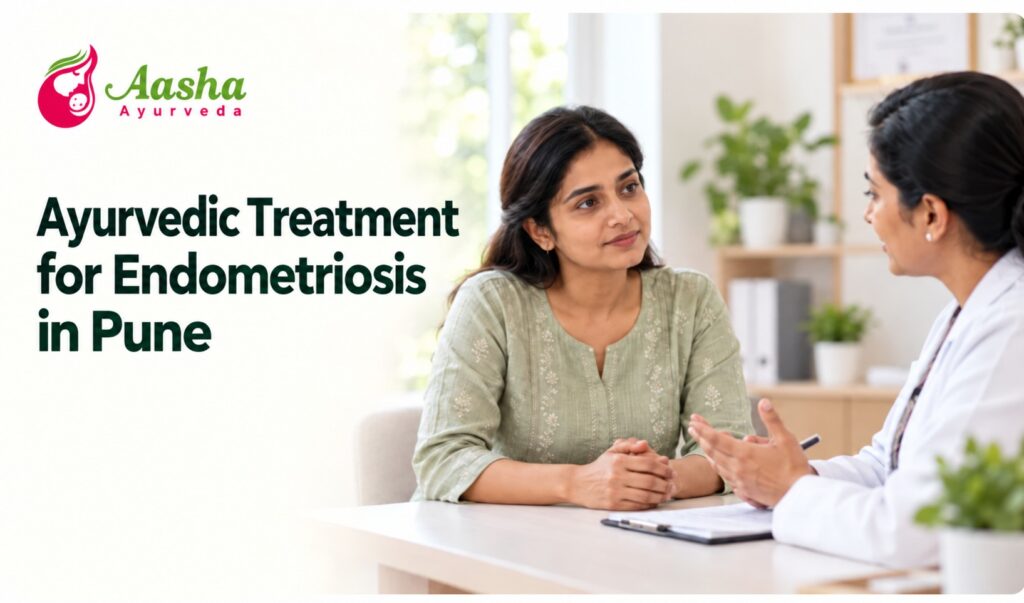
Ayurvedic Treatment for Endometriosis in Pune
Endometriosis does not affect every woman in the same way. One woman may mainly struggle with severe periods, another may have an ovarian endometrioma, while someone else may first discover the condition during a fertility evaluation.
If you are searching for Ayurvedic Treatment for Endometriosis in Pune, Aasha Ayurveda provides individualized Ayurvedic support based on symptoms, menstrual history, medical reports, previous treatment, lifestyle and reproductive goals.
The treatment approach may differ depending on whether your priority is:
- reducing menstrual discomfort
- managing recurring pelvic symptoms
- supporting menstrual wellness
- addressing lifestyle and digestive concerns
- planning pregnancy
- managing endometriosis alongside fertility problems
For complete condition-specific information, visit Ayurvedic Endometriosis Treatment.
What Is Endometriosis?
Endometriosis is a condition in which tissue similar to the uterine lining develops outside the uterus.
It may affect structures such as:
- ovaries
- fallopian tubes
- pelvic lining
- tissue surrounding reproductive organs
- other areas within the pelvis
The condition can vary significantly in location and severity.
This is also why pain intensity does not always match disease extent.
A woman with significant pain may have a different disease pattern from another woman with fewer symptoms.
How Do You Know If Period Pain May Need Evaluation?
Period cramps can occur normally, but repeated severe pain deserves attention.
Consider further evaluation if your menstrual pain:
- stops you from attending work or college
- repeatedly affects sleep
- requires frequent pain medication
- has progressively become worse
- starts several days before menstruation
- continues after the period
- occurs during intercourse
- is associated with bowel discomfort
- occurs along with difficulty conceiving
The important question is not simply “Do periods hurt?”
It is:
“How much does the pain affect normal life?”
Common Endometriosis Symptoms
Women may experience different combinations of symptoms.
| Concern | How It May Present |
| Menstrual pain | Severe cramps before or during periods |
| Pelvic pain | Persistent or recurring lower abdominal discomfort |
| Painful intercourse | Deep pelvic pain during or after sex |
| Heavy bleeding | Heavier or prolonged menstrual flow |
| Digestive symptoms | Bloating or bowel discomfort around periods |
| Back pain | Lower back or pelvic-region discomfort |
| Fatigue | Tiredness associated with pain or heavy bleeding |
| Fertility problems | Pregnancy taking longer than expected |
| Endometrioma | Endometriosis-related ovarian cyst |
Some women have relatively mild symptoms despite having endometriosis.
Symptoms alone therefore cannot confirm or rule out the condition.
Endometrioma: When the Ovary Is Involved
Endometriosis may sometimes form an ovarian cyst known as an endometrioma.
This can be particularly important for women who are planning pregnancy.
Treatment planning may need to consider:
- patient’s age
- size of the endometrioma
- one or both ovaries involved
- severity of symptoms
- AMH or ovarian reserve
- previous ovarian surgery
- fertility goals
An ovarian cyst should therefore not be treated simply according to its size.
Its effect on symptoms and reproductive planning also matters.
Can Endometriosis Affect Fertility?
Yes. Endometriosis may contribute to difficulty conceiving in some women.
Potential fertility-related factors may include:
- pelvic inflammation
- adhesions
- ovarian involvement
- endometrioma
- fallopian tube involvement
- changes in pelvic anatomy
- ovarian-reserve concerns in some cases
But endometriosis does not mean every woman will be infertile.
Some women conceive naturally, while others may require further fertility evaluation.
Women who are actively trying to conceive can also explore Ayurvedic Infertility Treatment.
What Should Be Checked When Endometriosis and Infertility Occur Together?
Fertility planning should look at the complete couple rather than only the endometriosis diagnosis.
Important factors may include:
Age
Reproductive potential changes with age.
Ovarian Reserve
AMH and other findings may provide information about ovarian reserve.
Ovulation
Regular ovulation is important for natural conception.
Fallopian Tubes
Tubal health can influence whether sperm and egg are able to meet.
Endometrioma
Ovarian involvement may influence treatment planning.
Previous Surgery
Previous ovarian or pelvic surgery may be relevant.
Male Fertility
The partner’s sperm parameters can also affect conception.
This is why a fertility-focused plan may differ significantly from a plan designed mainly for menstrual pain.
Endometriosis and Fallopian Tubes
Endometriosis can sometimes be associated with adhesions or changes around the fallopian tubes.
When fertility is a concern, tubal evaluation may therefore become important.
Women with a confirmed tubal problem can explore Fallopian Tubal Blockage Treatment.
Endometriosis and tubal blockage may coexist, but they should not automatically receive the same treatment.
How Is Endometriosis Assessed?
A proper evaluation may involve several sources of information.
Symptom History
The discussion may include:
- when pain occurs
- severity of pain
- period duration
- bleeding pattern
- pain during intercourse
- bowel or urinary symptoms
- fertility history
- previous medicines
- previous surgery
Pelvic Ultrasound
Ultrasound may help identify ovarian endometriomas and some pelvic abnormalities.
However, not every form of endometriosis is visible on routine ultrasound.
MRI
MRI may sometimes be used when more detailed pelvic information is required.
Laparoscopy
Laparoscopy may be considered for diagnosis or treatment in selected cases.
The appropriate approach depends on symptoms, medical findings and reproductive goals.
Ayurvedic Treatment for Endometriosis in Pune
At Aasha Ayurveda, Ayurvedic endometriosis care is individualized rather than based on one fixed medicine or therapy.
Depending on the woman’s condition, support may include:
- Ayurvedic herbal guidance
- menstrual-wellness support
- diet planning
- digestive-health support
- lifestyle modification
- stress-management guidance
- selected Panchakarma therapies
- reproductive-wellness support
- fertility guidance where relevant
- follow-up care
The treatment priorities may change according to the woman’s primary concern.
For example:
- Pain-focused patient: menstrual and pelvic symptoms may be the main concern.
- Endometrioma patient: ovarian findings and reproductive goals become more important.
- Woman trying to conceive: ovarian reserve, ovulation, tubes and male fertility may also need consideration.
Ayurvedic Perspective on Menstrual Wellness
Ayurvedic assessment may consider the woman as a whole rather than focusing only on one scan result.
Traditional evaluation may look at:
- menstrual pattern
- pain characteristics
- digestion
- appetite
- sleep
- stress
- bowel habits
- lifestyle
- constitution
Ayurvedic principles involving Vata, Pitta, Kapha and Agni may also form part of individualized planning.
These traditional concepts can guide Ayurvedic care but should not replace appropriate gynecological assessment.
Ayurvedic Herbal Support
Ayurvedic herbal formulations may be selected according to individual symptoms and health history.
Factors that may be considered include:
- pain pattern
- menstrual flow
- digestive symptoms
- fertility goals
- age
- other medical conditions
- current medications
There should not be one standard “endometriosis medicine” for every woman.
Patients already using hormonal therapy, fertility medicines, thyroid medicines, pain medication or other prescriptions should inform their practitioner before adding Ayurvedic products.
Panchakarma for Endometriosis Wellness
Selected Panchakarma procedures may sometimes be considered as part of personalized Ayurvedic wellness care.
Potential goals may include:
- supporting general wellbeing
- relaxation
- stress management
- supporting healthy routines
- individualized Ayurvedic care
Panchakarma is not automatically required for every endometriosis patient.
Suitability depends on individual health and assessment.
For more information, visit Panchakarma at Aasha Ayurveda.
Is Uttar Basti Used for Endometriosis?
Uttar Basti is a specialized Ayurvedic procedure used in selected gynecological and reproductive-wellness settings.
It may be considered only when appropriate after individual assessment.
It should not be described as a guaranteed method to:
- remove endometriosis lesions
- eliminate an ovarian endometrioma
- reverse severe pelvic adhesions
- permanently cure endometriosis
- guarantee pregnancy
Its suitability should be determined under qualified Ayurvedic supervision.
Diet for Endometriosis Wellness
There is no proven diet that completely cures endometriosis.
However, a balanced diet can support general health and nutritional adequacy.
| Prefer More Often | Limit |
| Seasonal vegetables | Highly processed food |
| Fresh fruits | Frequent sugary beverages |
| Dal and pulses | Excess fried food |
| Whole grains | Excess alcohol |
| Nuts and seeds | Smoking |
| Healthy fats | Extreme diets |
| Adequate protein | Random supplements |
| Sufficient fluids | Unverified detox products |
Women with other concerns such as anemia, thyroid problems, PCOS, diabetes or digestive symptoms may need a more personalized diet.
Does Endometriosis Require Avoiding Specific Foods?
Not every woman needs an extreme elimination diet.
Removing several foods without a clear reason may make the diet unnecessarily restrictive.
A better approach is to focus on:
- balanced meals
- adequate protein
- fiber-rich foods
- micronutrient-rich foods
- appropriate calorie intake
- individual food tolerance
Diet should be adjusted according to the woman’s overall health rather than following a universal online “endometriosis diet.”
Endometriosis and Digestive Symptoms
Some women notice gastrointestinal symptoms particularly around their menstrual cycle.
These may include:
- bloating
- constipation
- loose stools
- pain while passing stool
- abdominal discomfort
However, gastrointestinal symptoms may also have other causes.
Persistent bowel problems should therefore be properly evaluated rather than automatically blamed on endometriosis.
Lifestyle Support for Women With Endometriosis
Healthy lifestyle habits cannot remove endometriosis lesions, but they may support general wellbeing.
Useful areas can include:
- regular sleep
- suitable physical activity
- balanced nutrition
- healthy body weight
- stress management
- avoiding smoking
- limiting alcohol
- yoga or meditation where appropriate
Exercise intensity can be modified when pelvic pain is severe.
When Pregnancy Is the Goal
If a woman with endometriosis wants to conceive, fertility goals should be discussed early.
Questions that become particularly important include:
How old is the woman?
What does ovarian reserve look like?
Is an endometrioma present?
Are the tubes open?
Is ovulation occurring?
Has ovarian surgery been performed before?
How long has pregnancy been attempted?
Has the male partner been evaluated?
For broader fertility support, visit Ayurvedic Infertility Treatment.
Can Endometriosis Return After Surgery?
Endometriosis may recur in some women after previous surgery or treatment.
The likelihood varies according to:
- individual disease pattern
- severity
- age
- type of surgery
- hormonal treatment
- fertility goals
Previous operative and pathology records can therefore be useful during a future consultation.
What Should You Bring to Your Consultation?
Existing reports can help provide valuable context.
Endometriosis Records
- pelvic ultrasound
- MRI
- laparoscopy findings
- surgery reports
- pathology records
Fertility Reports
- AMH
- hormonal tests
- HSG
- follicular monitoring
- previous IUI or IVF reports
Medication History
Mention previous or current:
- hormonal medicines
- pain medicines
- fertility medicines
- Ayurvedic medicines
- supplements
- surgery
This helps create a more individualized plan.
Who May Consider Ayurvedic Endometriosis Support?
Women may consider Ayurvedic support if they are dealing with:
- diagnosed endometriosis
- recurrent severe period pain
- chronic pelvic discomfort
- painful intercourse
- ovarian endometrioma
- menstrual-health concerns
- difficulty conceiving
- digestive symptoms around periods
- lifestyle and wellness concerns
Ayurvedic support should not delay medical, surgical or fertility treatment when these are clinically necessary.
Treatment Process at Aasha Ayurveda
Step 1 – Understand Symptoms and Goals
Pain, menstruation, reproductive history and fertility goals are discussed.
Step 2 – Review Existing Reports
Available ultrasound, MRI, laparoscopy or fertility investigations may be reviewed.
Step 3 – Ayurvedic Assessment
Lifestyle, digestion, constitution and overall health may be considered.
Step 4 – Personalized Care Plan
Depending on individual needs, support may include:
- Ayurvedic formulations
- menstrual-wellness guidance
- diet
- lifestyle changes
- selected therapies
- Panchakarma where appropriate
- fertility guidance where needed
Step 5 – Regular Review
Symptoms and response to the wellness plan may be monitored over time.
There is no single fixed treatment duration for all women with endometriosis.
Why Choose Aasha Ayurveda for Endometriosis Support?
Personalized Rather Than Standardized Care
Treatment planning reflects individual symptoms, reports and reproductive goals.
Menstrual Health Is Considered
Pain, bleeding and cycle-related concerns may be reviewed together.
Fertility Goals Are Not Ignored
Women planning pregnancy may require a different strategy.
Diet and Lifestyle Support
Nutrition, stress, sleep and activity may form part of overall care.
Responsible Expectations
No responsible treatment should guarantee complete lesion removal, avoidance of every surgery or pregnancy.
Areas We Serve Around Pune
Women searching for Ayurvedic Treatment for Endometriosis in Pune may seek guidance from different parts of Pune and the wider Pune metropolitan region, including:
- Baner
- Aundh
- Kothrud
- Bavdhan
- Wakad
- Hinjawadi
- Balewadi
- Viman Nagar
- Kharadi
- Hadapsar
- Magarpatta
- Koregaon Park
- Kalyani Nagar
- Shivajinagar
- Pimple Saudagar
- Pimpri
- Chinchwad
- Wagholi
These locality references describe the wider Pune audience and do not imply that Aasha Ayurveda operates a physical clinic in each locality.
Patients should confirm the current consultation location and appointment availability before travelling.
Frequently Asked Questions
Q1. Can Ayurveda permanently cure endometriosis?
Ayurvedic care may support menstrual symptoms, lifestyle and reproductive wellness, but it should not be presented as a guaranteed permanent cure.
Q2. Is severe period pain a symptom of endometriosis?
It can be, but severe period pain may have several possible causes. Proper evaluation is important.
Q3. Can endometriosis affect fertility?
Yes. In some women, endometriosis may affect ovarian, tubal or pelvic factors related to conception.
Q4. Can an endometrioma affect ovarian reserve?
An ovarian endometrioma and previous ovarian surgery may sometimes be relevant to ovarian reserve. AMH should be interpreted together with age and other fertility findings.
Q5. Can Ayurveda remove an endometrioma?
Ayurvedic care should not be advertised as a guaranteed way to make an ovarian endometrioma disappear. Appropriate medical monitoring remains important.
Q6. Is surgery compulsory for endometriosis?
No. Management depends on symptoms, findings, age, fertility goals and previous treatment.
Q7. Can endometriosis return after surgery?
Yes, recurrence may occur in some women.
Q8. Is Panchakarma used for endometriosis?
Selected Panchakarma procedures may be considered within an individualized Ayurvedic wellness plan, but they are not necessary for every woman.
Q9. Is Uttar Basti used for endometriosis?
It may be considered in selected gynecological Ayurvedic programs after proper assessment. It is not a universal treatment.
Q10. Can a woman with endometriosis conceive naturally?
Yes, some women conceive naturally. Others may experience fertility difficulties depending on age, ovarian reserve, tubal health, disease pattern and male fertility factors.
Q11. What reports should I bring?
Available ultrasound, MRI, laparoscopy findings, AMH, HSG, hormonal reports and previous fertility-treatment records can be useful.
Q12. Does Aasha Ayurveda provide endometriosis support for Pune patients?
Aasha Ayurveda provides Ayurvedic consultation and reproductive-wellness support. Patients from Pune should confirm the current consultation location and appointment availability before travelling.
Book Your Endometriosis Consultation at Aasha Ayurveda
If you are looking for Ayurvedic Treatment for Endometriosis in Pune, the first step is understanding your symptoms, previous findings and reproductive goals.
Aasha Ayurveda’s individualized approach may include:
✔ Ayurvedic Herbal Guidance
✔ Menstrual Wellness Support
✔ Diet & Nutrition Planning
✔ Lifestyle Modification
✔ Panchakarma Where Appropriate
✔ Reproductive Wellness Support
✔ Fertility Guidance When Required
✔ Stress-Management Support
✔ Personalized Follow-Up
For complete condition-specific information, visit Ayurvedic Endometriosis Treatment or contact Aasha Ayurveda for consultation details.